
Providing meaningful feedback is something that I believe I currently struggle with as a pre-service teacher. A lot of what we do as becoming teachers, is provide feedback to our peers on what could be improved upon. We often discuss the “sandwich method,” where you provide one good thing, one thing to improve, followed by something else that was successful. Although I do see the value in using this method, I also think it is important to narrow down your focus when providing feedback. The article by Sackstein discusses the importance of focusing on one or two points, rather than providing feedback on everything at once. I think this is important no matter who is providing the feedback, as listing too many things that can be improved is often overwhelming for the learner. Another aspect discussed by Sackstein is that even though a student might be receiving positive feedback, it may be meaningless. It is important to be extremely specific when providing feedback, whether it is positive or negative. Students need to know and understand when they are doing things properly and successfully just as often as they need to know how to improve. I really like the concept of teaching students how to use feedback. This is a skill that I think many students miss out on throughout schooling. It not only allows them to better the learning of their peers, but it also allows them to be more successful themselves. I also really liked the point from Sackstein about providing feedback in student friendly ways. This ensures that our students can comprehend the feedback that is given, along with relating the feedback to the learning goals that students have set out for themselves. Having students set our their own goals teaches them responsibility and holds them accountable for their own learning.
Sackstein also covers the topic of what to do when you have students who are reluctant to accept feedback that is given to them because they believe that what they have done is good enough. This is something that I think teachers need to discuss with students in order to help them understand that they do not need to be offended or upset about feedback that is given to them. In contrast, students who are providing feedback need to be aware that they can point out things for improvement without hurting their peers feelings. The point of feedback is to learn and grow from mistakes, rather than give up altogether when they stumble.
Another aspect of this reading that I thoroughly enjoyed, was the idea of creating rubrics with your students. This once again allows students to learn about responsibility and self-accountability. I believe that if our students have a say in what they are being assessed on, they will be more successful. Creating these rubrics allows students to see (and decide on) what their assignment needs to include, rather than just hearing it from their teachers and forgetting the assessment criteria shortly thereafter.
In the first video segment, it is mentioned that students often receive their marks, then calculate what percentage they got and then put away the assignment. I know that I was also guilty of this, and still even do it to this day. We live in a society where there is an emphasis on numerical grades rather than comprehension and retainment. I also like how the process of providing feedback is broken down into a feedback loop. This is an excellent visual aid that allows me to see all of the components that go into providing quality feedback for my students.
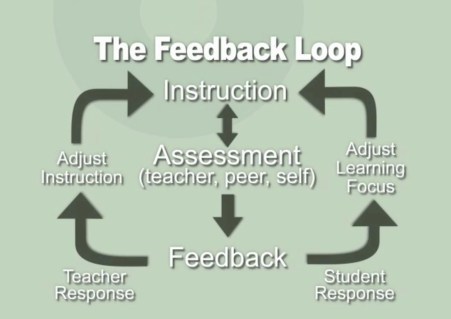
The videos discuss how feedback should be consistent and continuous throughout, rather than produced solely at the end of the task that is being completed. I easily related this to the class clapping activity that we did a few weeks ago in class. We learned from that activity that our students will be more successful if they are consistently given feedback. However, this feedback must be meaningful, in that it must show students what they can do to achieve a higher mark, or better their understanding of what is being required of them.
 Hannah’s Blog
Leave a comment